How do galaxies grow?
ARRAKIHS will image the faint stellar outskirts of nearby galaxies similar to the Milky Way, helping scientists investigate how galaxies assemble and evolve.
The universe keeps its history in the light we almost miss.
ARRAKIHS is an ESA mission designed to look for extremely faint structures around nearby galaxies — clues to how galaxies like our own came to be.
See what 44 hours at Javalambre revealAround a spiral galaxy, the glow thins into a sprawling halo. Within it, streams and fragments can preserve traces of earlier encounters — a kind of archaeological record written in starlight.
ARRAKIHS will image the faint stellar outskirts of nearby galaxies similar to the Milky Way, helping scientists investigate how galaxies assemble and evolve.
Stellar haloes can hold the remains of smaller galaxies that were drawn in and disrupted. Their shape and texture offer clues to the history of the galaxy they surround.
By studying a sample of nearby Milky Way-like galaxies, the mission can test whether galaxies share a common story or grew in different ways.
Dark matter cannot be seen directly. The faint stellar structures around galaxies can help researchers test how its gravity has shaped their growth.
Some of the most revealing parts of a galaxy are written in light that nearly disappears.
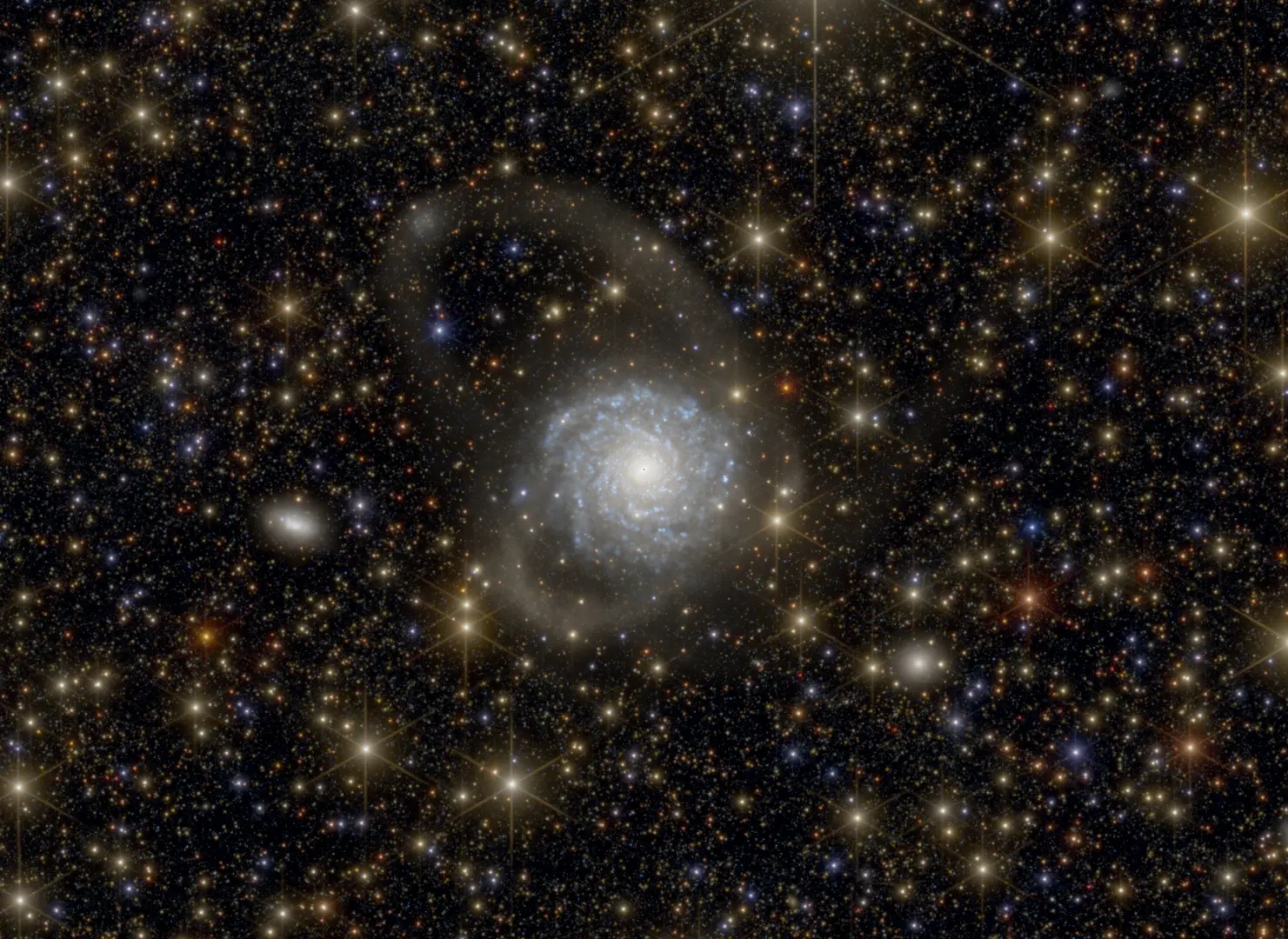
Look beyond the bright disc. Can you make out a faint arc among the stars?
Look above and to the left of the disc. The faint hook is a stellar stream. When gravity pulls a small galaxy or a star cluster apart, its stars can trace an arc like this. ARRAKIHS will look for these traces to piece together the history of galaxies like ours.
Yes. As the Sagittarius dwarf galaxy orbits the Milky Way, our galaxy’s gravity draws stars away from it. Those stars form a stream along its orbit that astronomers have observed. The arc in the image is simulated. The Sagittarius stream is a real example much closer to home.
ARRAKIHS is led from Spain and brings together a wider European consortium. In June 2026, ESA formally adopted the mission and committed to its implementation.
Chosen as ESA’s second fast-class, or F-class, science mission.
A ground-based version of the camera starts testing the mission’s observing strategy at the Javalambre Astrophysical Observatory.
The design study is complete. The spacecraft and instruments now move into development.
The current target is to begin the space mission by the end of the decade.
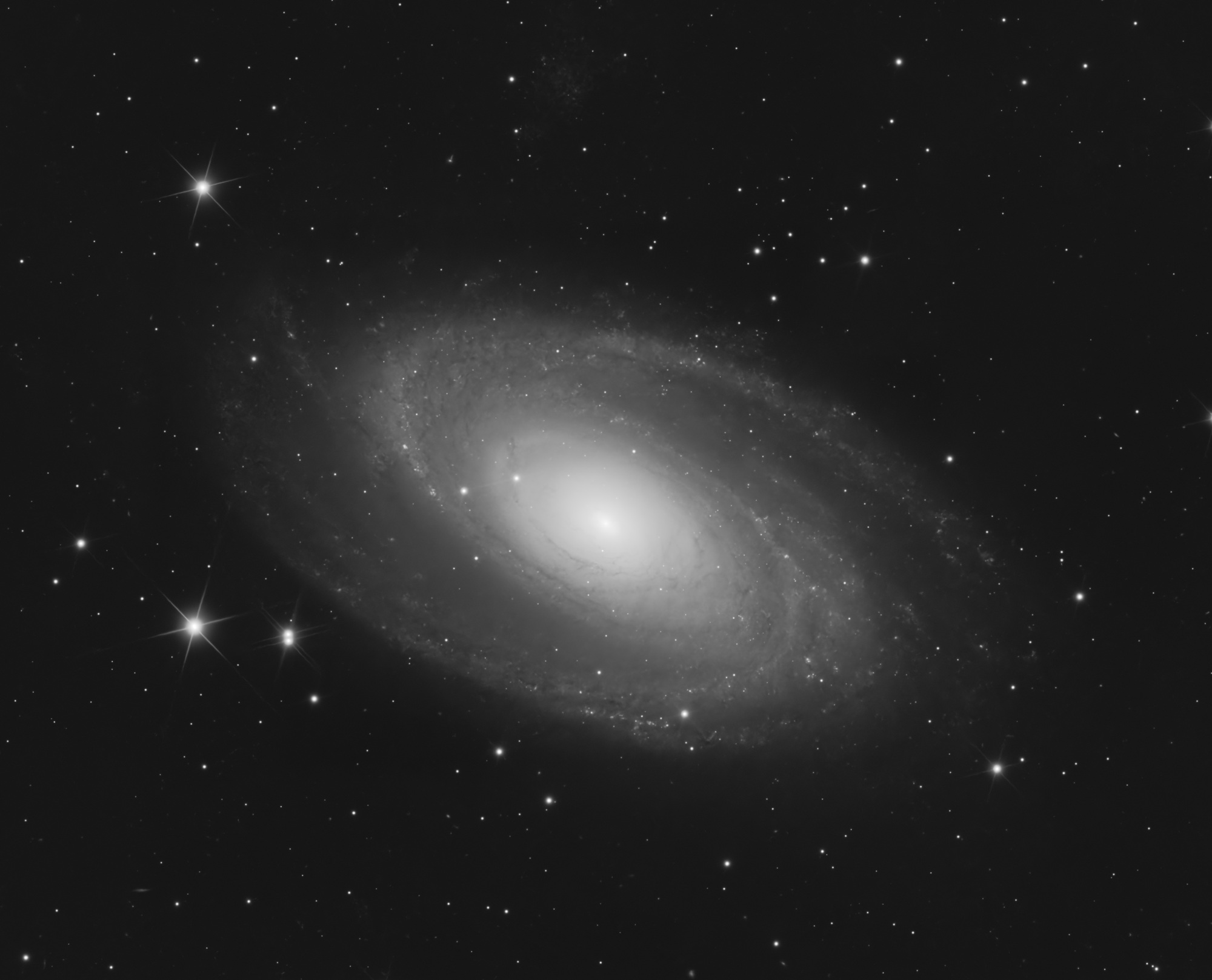
At Javalambre, a ground-based version of the mission’s camera has captured Bode’s Galaxy, 12 million light-years away. Testing the camera and observing strategy on Earth helps prepare the mission for space.
GROUND-BASED DEMONSTRATOR · JAVALAMBRE, TERUEL, SPAIN
ARRAKIHS · Javalambre, Teruel
Night after night, a camera at Javalambre collects light from NGC 6946. Tap “44 hours” to see 266 exposures combined.
Ground demonstrator image · ARRAKIHS Mission Consortium · CC BY 4.0
The original plate
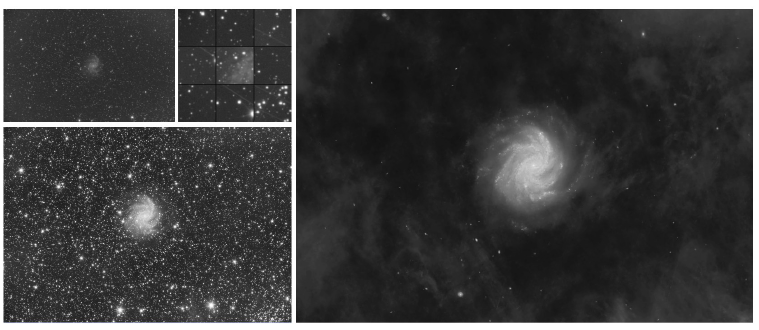
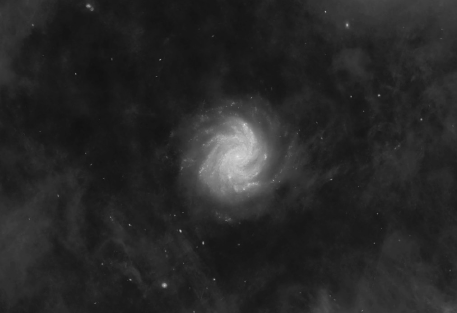 Where does the haze come from?
When the stars are suppressed and the contrast is stretched, veils of dust in our own Milky Way stand out. They are much closer to us than the spiral galaxy in the centre.
Processed view · ARRAKIHS Mission Consortium · CC BY 4.0From the mission team
How do astronomers study such faint light? Helena explains what Euclid and ARRAKIHS can discover together.
ARRAKIHS Mission Consortium · ISSI · 17 January 2025 · Watch on YouTube
The ARRAKIHS ground demonstrator observed this field from the Javalambre Astrophysical Observatory. The first view is a single 600-second exposure. The second is a preliminary stack of 266 exposures, adding up to about 44 hours of collected light.
The original panels use different framing and brightness settings. LUME Gravity has cropped each panel and marked the centre of the galaxy in the two main views.
The mission team and its scientific partners have shared images, a press room and video explainers. Here are a few good places to start.
A closer look at the ground demonstrator and the mission’s preparation at the Javalambre Astrophysical Observatory.
ARRAKIHS Mission Consortium · IFCA (CSIC–UC) · Javalambre Astrophysical Observatory · 23 May 2025 · YouTube
Reuse terms vary by item. Check each source for its licence and credit requirements. ESA’s simulation images are shared under CC BY 4.0.
A compact spacecraft will carry four cameras into Earth orbit. From there, ARRAKIHS will spend years looking for the faint traces that reveal how galaxies grew.
The current plan is to launch from Europe’s Spaceport there, using a Vega-C rocket. Target: late 2030.
A steady, dawn–dusk orbit helps keep the spacecraft’s conditions stable.
One instrument will observe the same galaxies in several bands of light.
Over three years, ARRAKIHS will look for faint haloes and streams around galaxies like the Milky Way.
LUME Gravity schematic · not to scale. Current launch plan: a Vega-C rocket from Europe’s Spaceport in French Guiana. Plans may evolve. Mission design · ESA factsheet