
ATLAS / EARTH
Our home, and beyond.
Explore our planet, look down from orbit, or follow Hubble and Webb.
EARTH / OUR REFERENCE WORLD
A world
worth knowing.
An ocean, an atmosphere and a changing surface. The world we call home is our starting point for understanding every other planet.
Explore Earth’s science · NASADSCOVR’s EPIC camera photographs Earth’s sunlit face. These are dated observations, rather than live video.
View the latest at NASA EPIC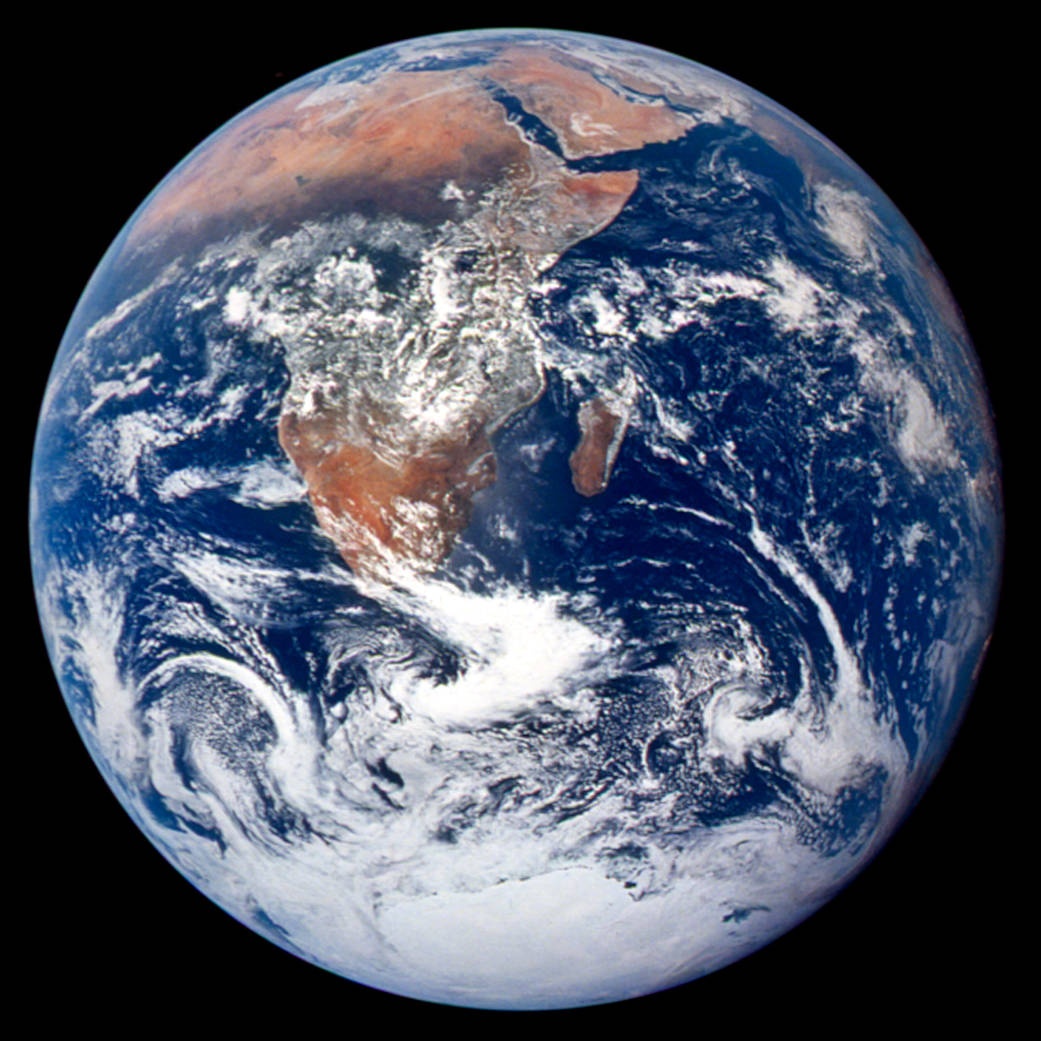
ISS / INTERNATIONAL SPACE STATION
A window
above Earth.
Look down on our planet through NASA’s external station camera. The player opens automatically, with sound off.
Watch on NASA’s siteLive views depend on the station’s signal. Darkness can mean the ISS is on Earth’s night side; interruptions or recorded segments may also appear.
If the player is unavailable, open NASA’s station view .
TELESCOPES / HUBBLE + WEBB
Where are they looking?
Our selected images from Hubble and Webb, alongside each telescope’s official observing schedule.
Schedules describe planned observations. “In progress” may not reflect an immediate change, and the sky map is not a live telescope image. Read the official guide
LUME SELECTION / HUBBLE + WEBB
Light, made visible.
Explore Hubble and Webb images from the earliest in the collection to the most recent. Each date marks the image’s public release.
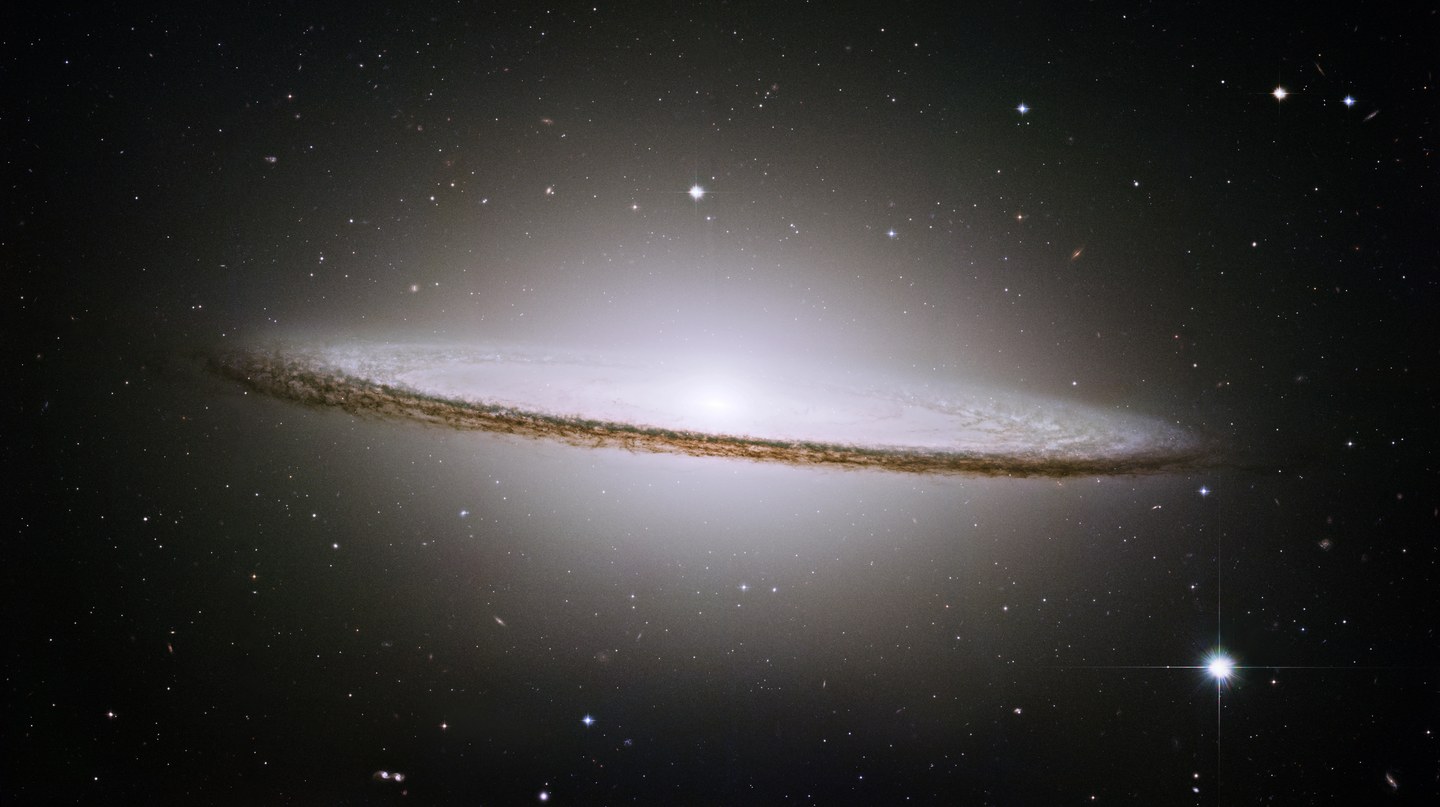
NASA and The Hubble Heritage Team (STScI/AURA) Sombrero Galaxy (M104)
We see this galaxy nearly edge-on. Dust cuts a dark lane across the glow of its central stars. To fit the whole disk into one picture, the Hubble team stitched together six views taken in May and June 2003. In Galaxies, you can switch between Hubble’s 2025 reprocessing and Webb’s 2024 infrared view.
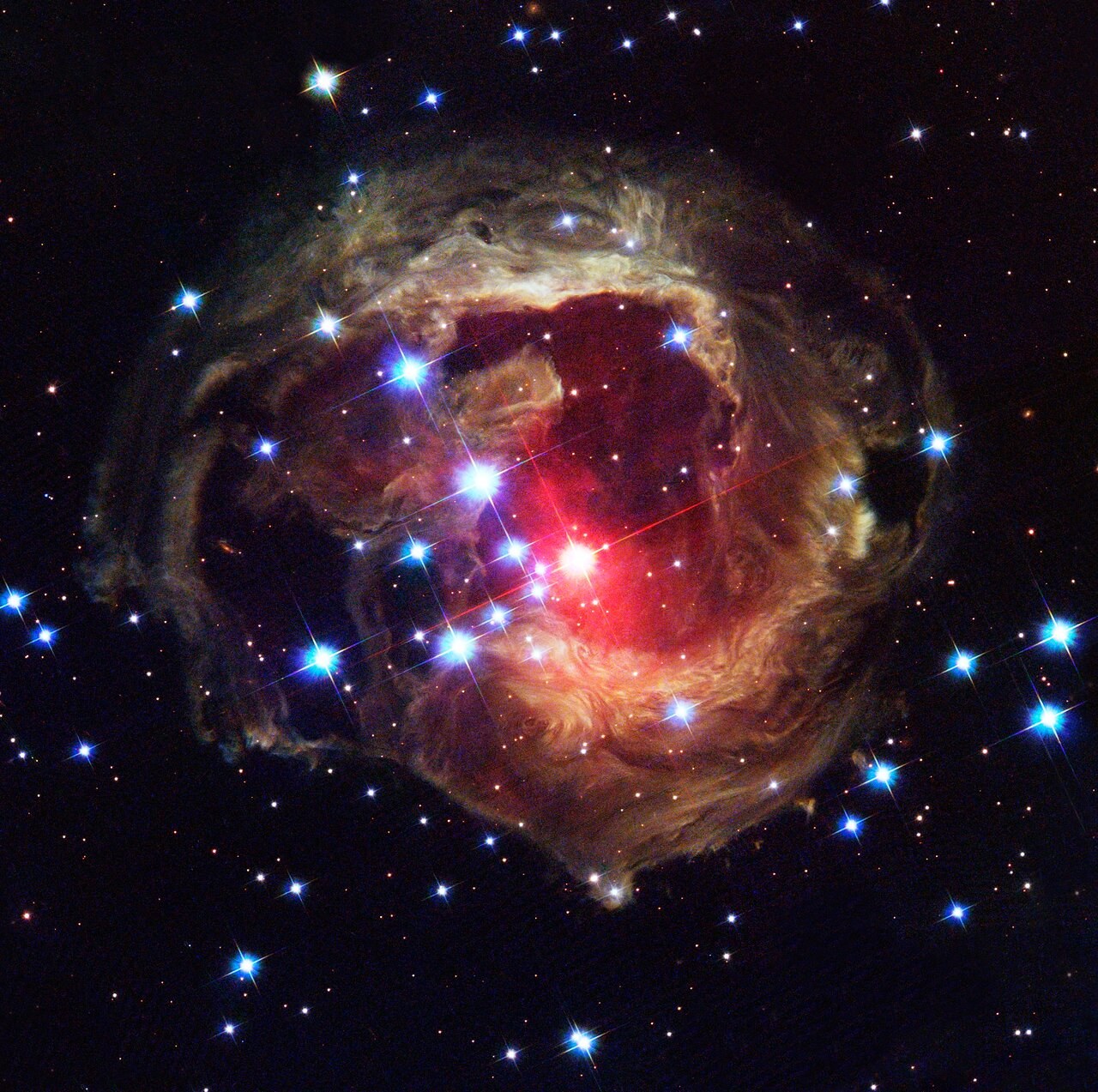
NASA, ESA, and The Hubble Heritage Team (AURA/STScI) The light echo of V838 Monocerotis
V838 Monocerotis flared in 2002. When Hubble looked again in October 2004, light from that flash was still reaching more distant layers of dust, lighting up the swirls around the star.
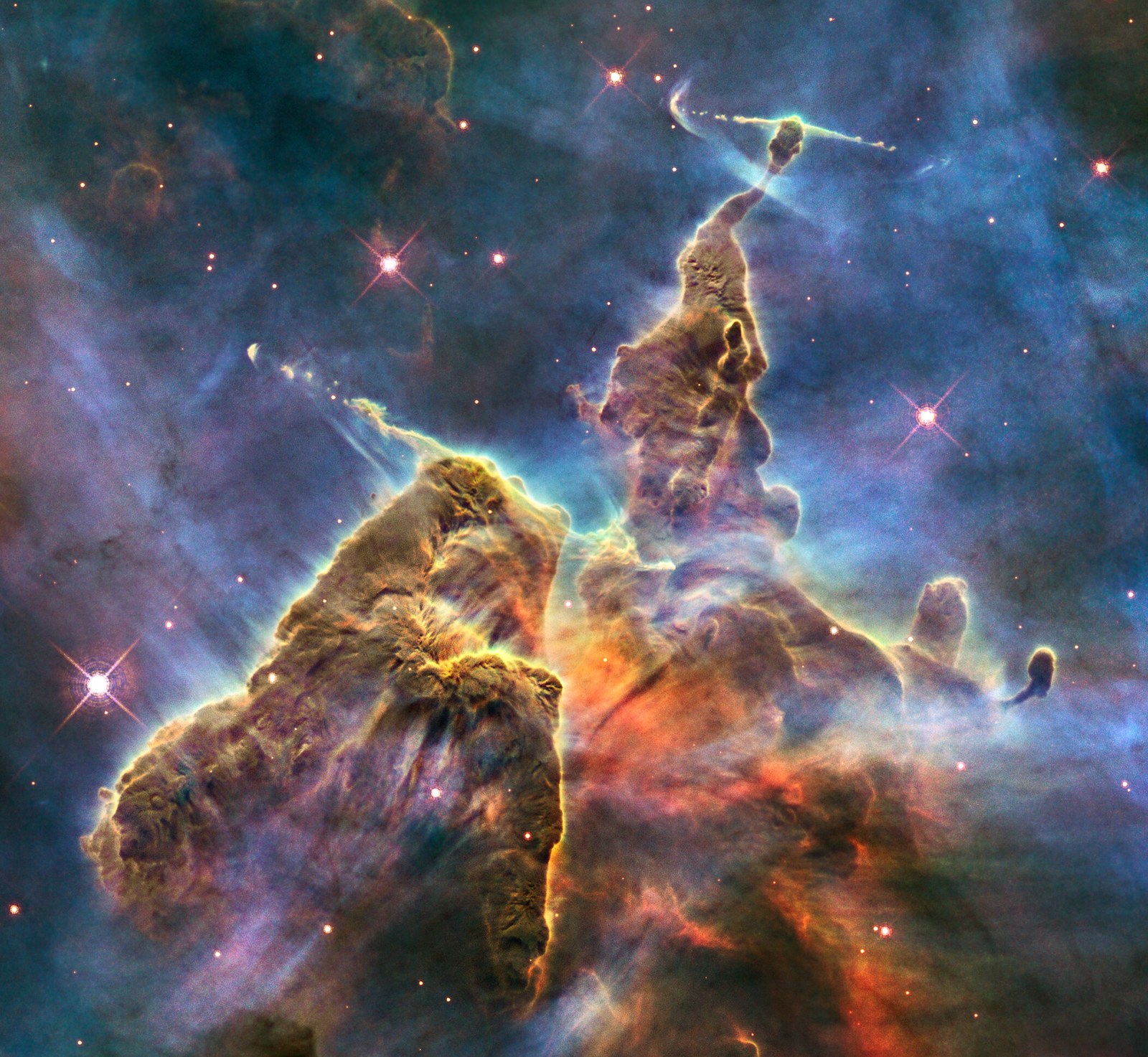
NASA, ESA, M. Livio and the Hubble 20th Anniversary Team (STScI) Mystic Mountain
In the Carina Nebula, light and winds from nearby stars sculpt a pillar of gas and dust three light-years tall. Slender jets of gas shoot from its peaks, revealing where young stars are forming inside. Hubble photographed it in February 2010.
Compare Hubble and WebbBack to the Hubble image
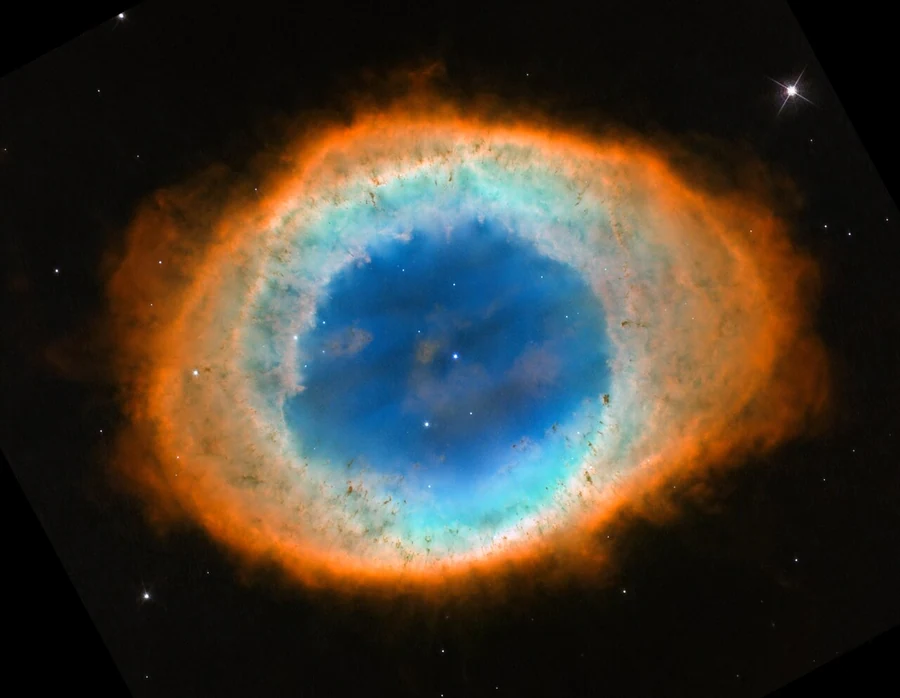
In the Ring Nebula, Webb resolves small knots of gas along the ring seen by Hubble.
Hubble · visibleWebb · near-infrared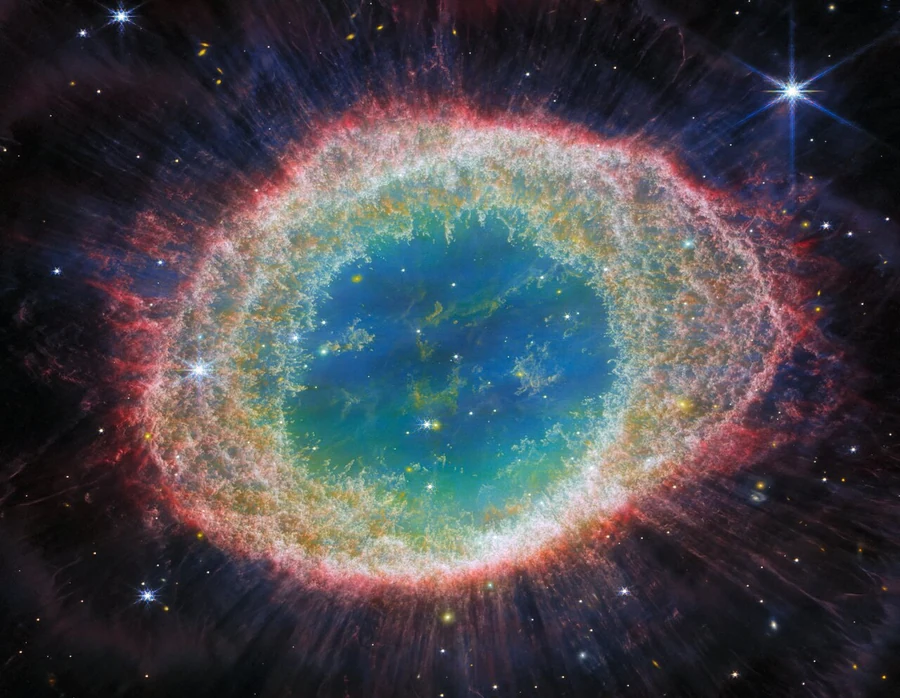
Hubble · NASA, ESA, C. Robert O’Dell (Vanderbilt University)
Webb · ESA/Webb, NASA, CSA, M. Barlow, N. Cox, R. Wesson
Original ESA comparison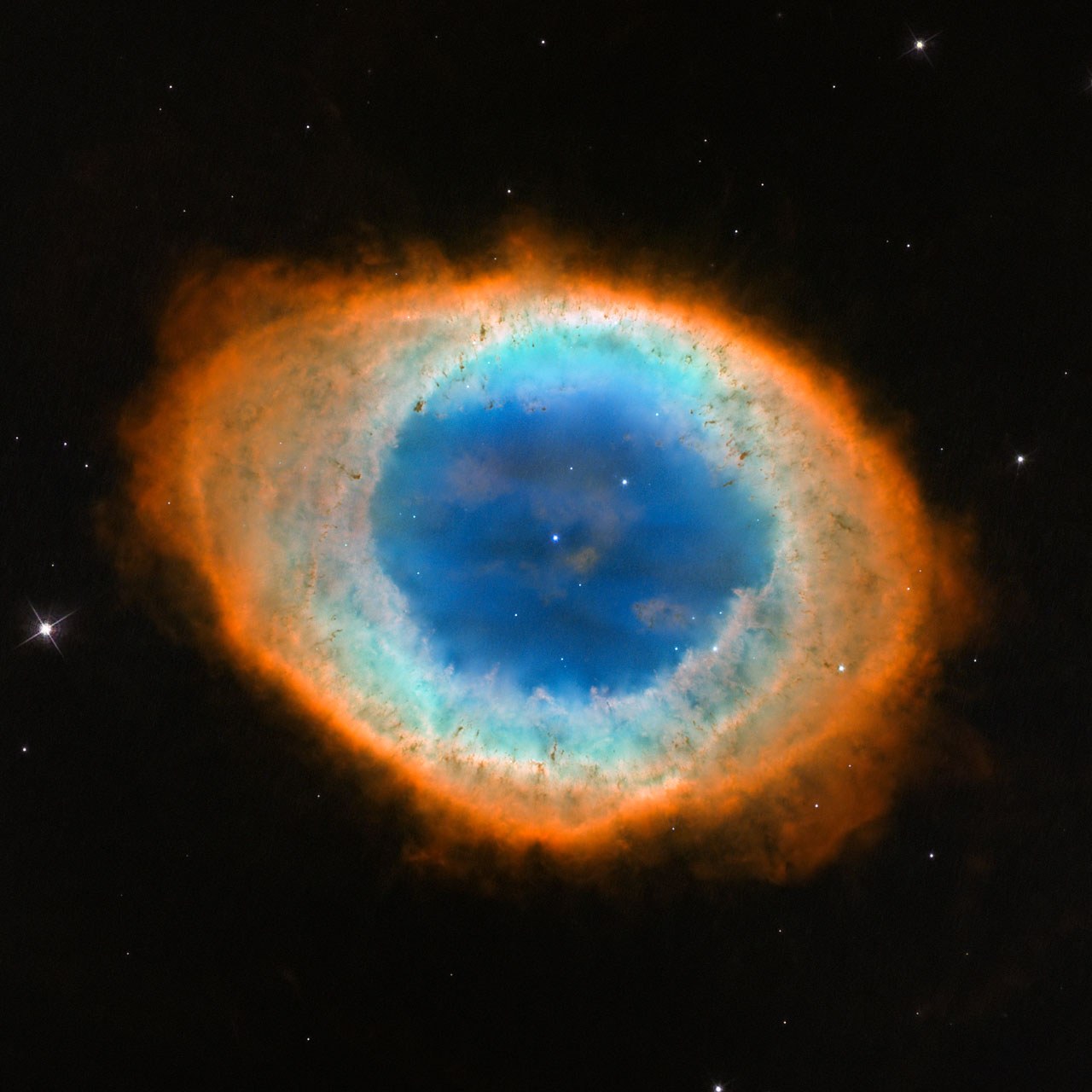
NASA, ESA, and C. Robert O’Dell (Vanderbilt University) The Ring Nebula · M57
At the centre of the ring is the tiny remnant of the star that shed this gas. Hubble photographed it in September 2011. Webb’s infrared view shows how the outer edge of the ring breaks up into filaments.
Compare Hubble and WebbBack to the Hubble image
In the Pillars of Creation, compare Hubble’s dark columns with the stars Webb picks out through the dust.
Hubble · visibleWebb · near-infrared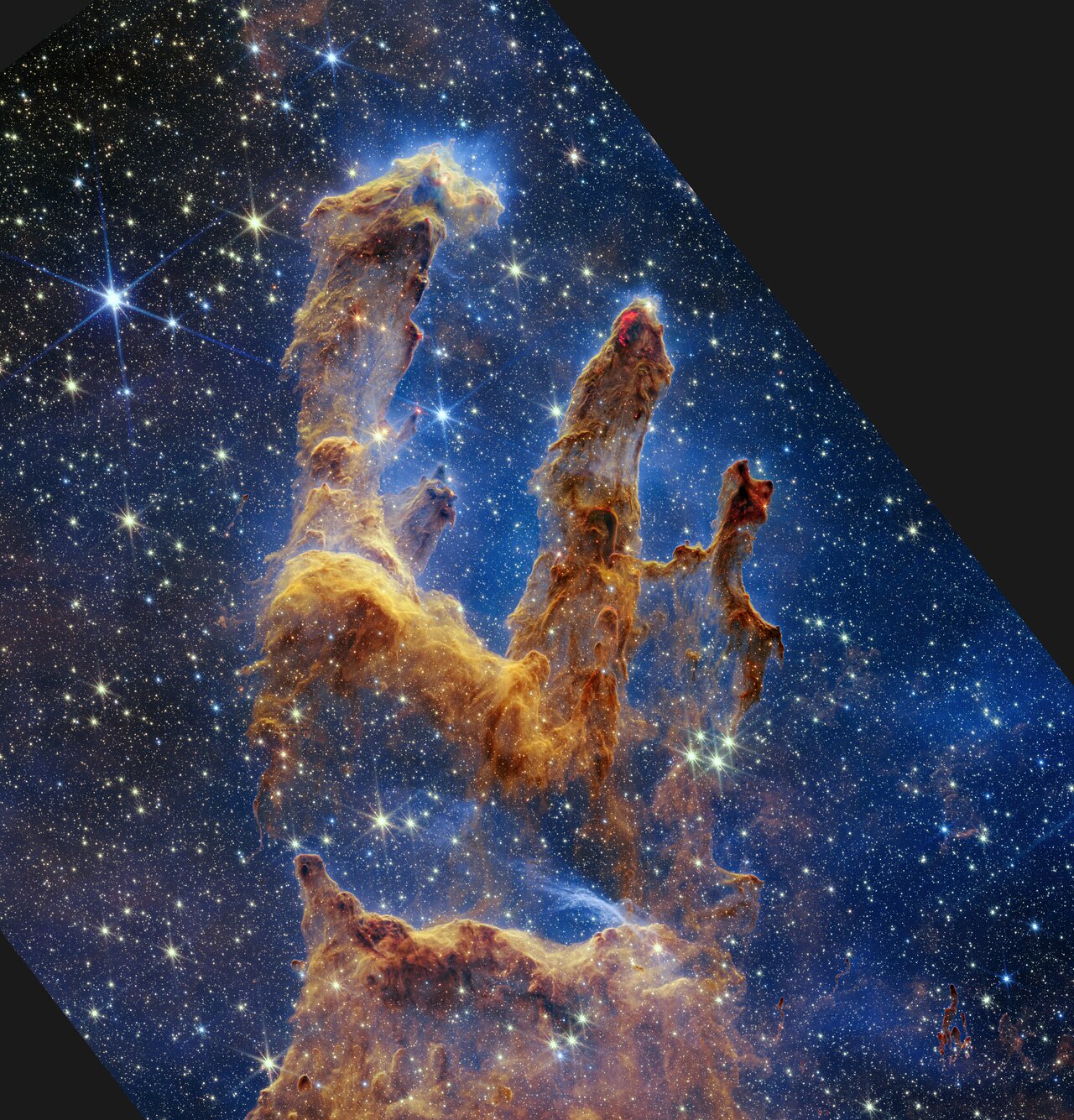
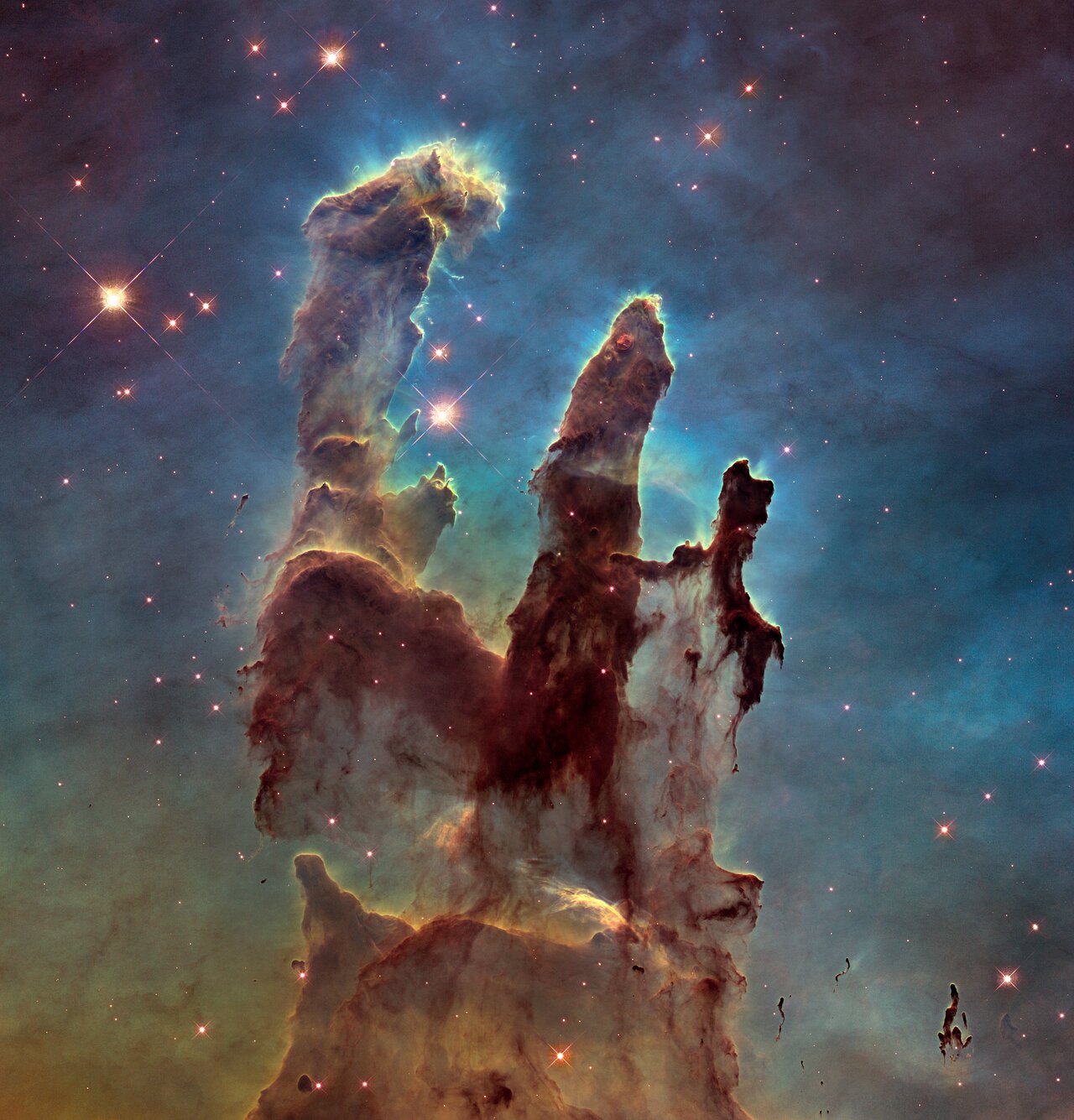
Hubble · NASA, ESA/Hubble and the Hubble Heritage Team
Webb · NASA, ESA, CSA, STScI; J. DePasquale, A. Koekemoer, A. Pagan (STScI)
Original ESA comparison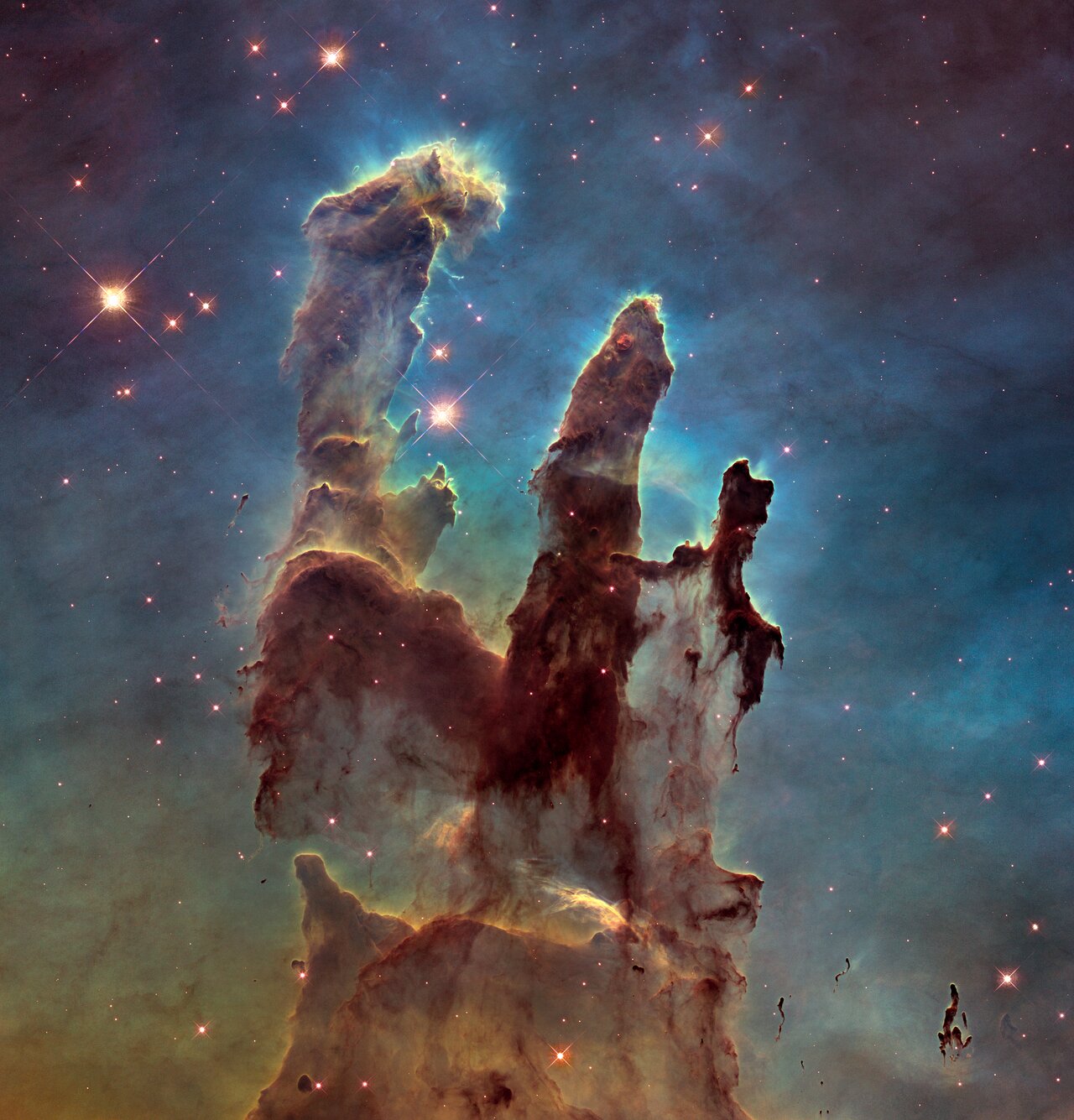
NASA, ESA/Hubble and the Hubble Heritage Team Pillars of Creation · Eagle Nebula
In September 2014, Hubble returned to the pillars it had photographed in 1995. Visible light traces the bright edges of three columns of gas and dust. Inside them, stars are forming.
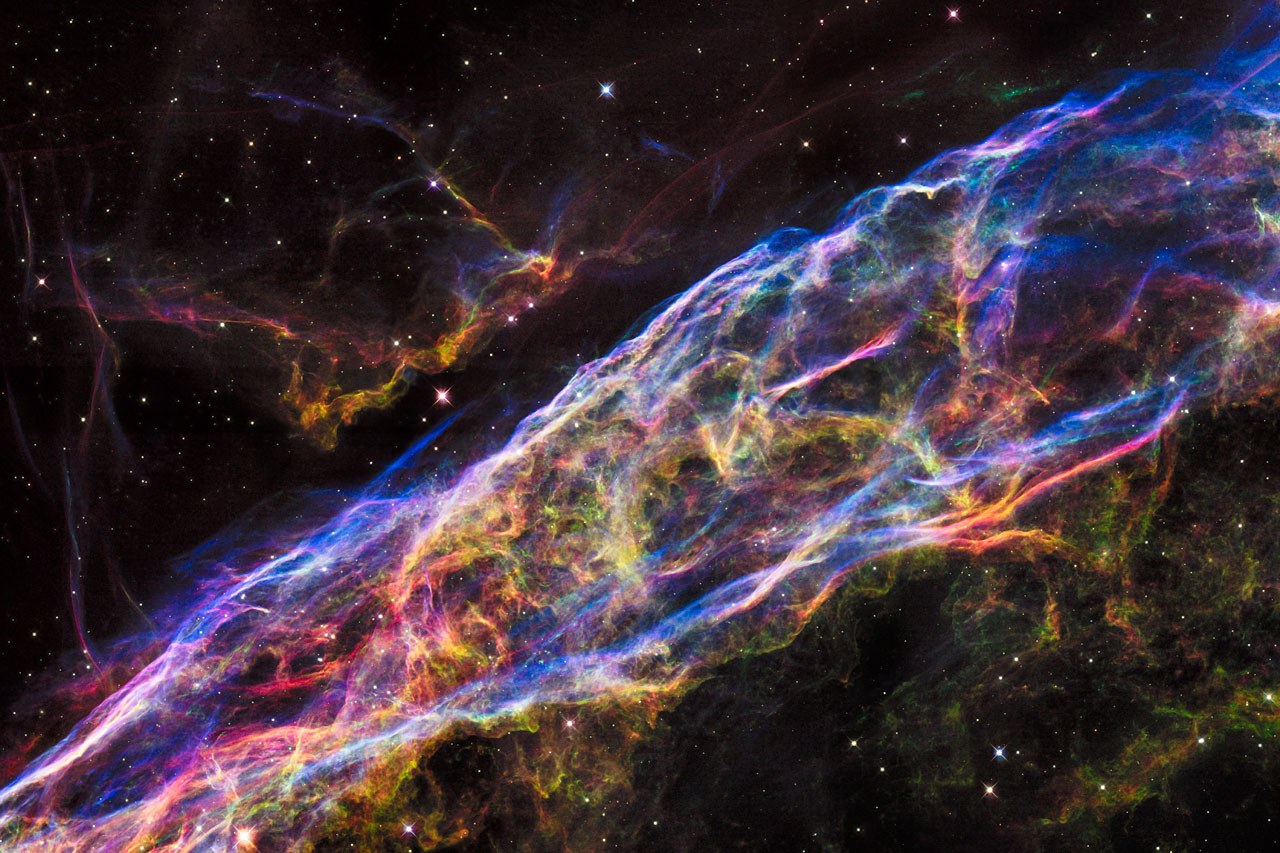
NASA, ESA, Hubble Heritage Team The Veil Nebula
These glowing threads trace the shock wave from a supernova. Hubble returned to this patch of the Veil in April 2015. Comparing it with the 1997 view reveals how the filaments have moved.
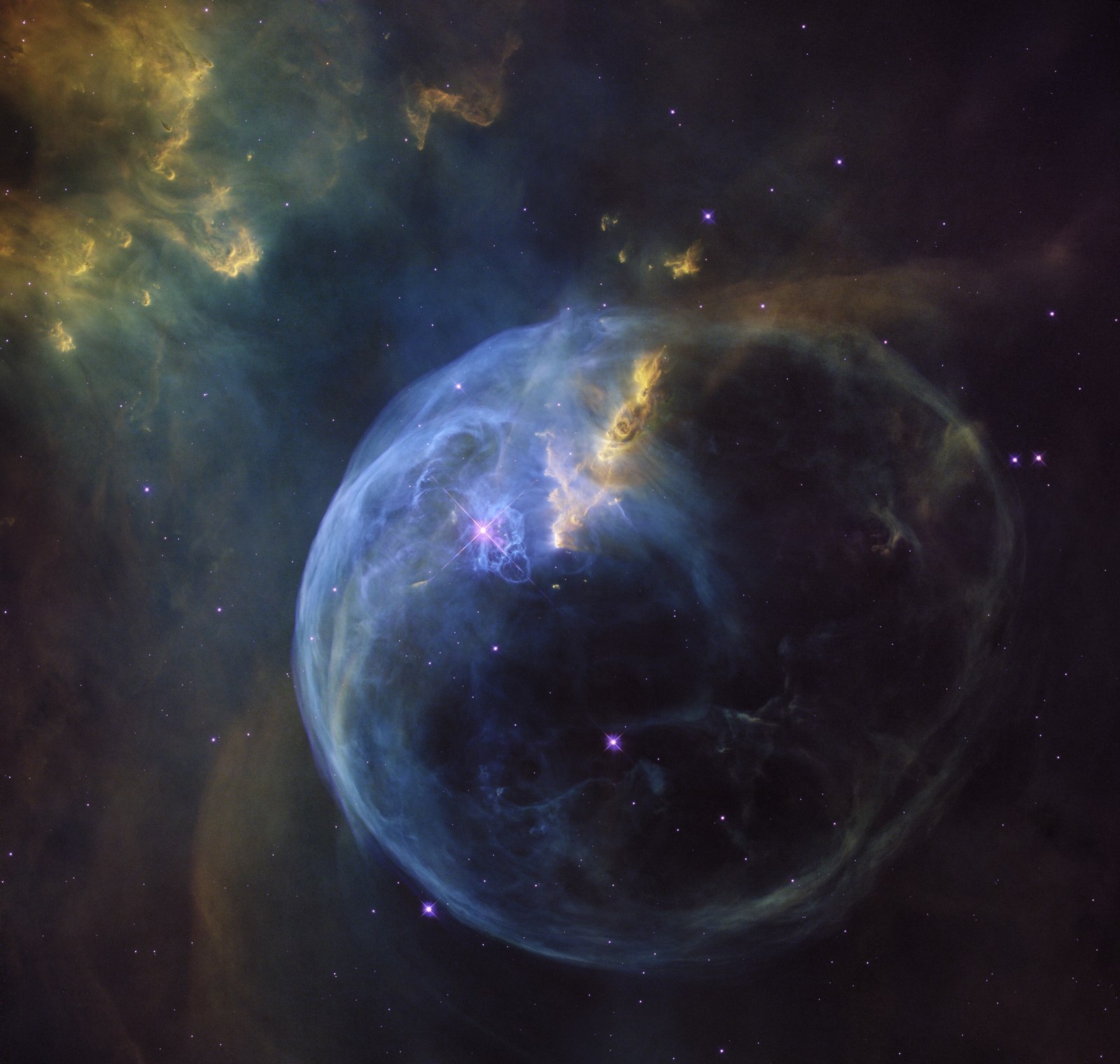
NASA, ESA, Hubble Heritage Team Bubble Nebula (NGC 7635)
A massive star blows a wind that sweeps up the surrounding gas into a bubble. The bright point to the left of centre is the star that inflates it. Hubble took the exposures for this image in February 2016.
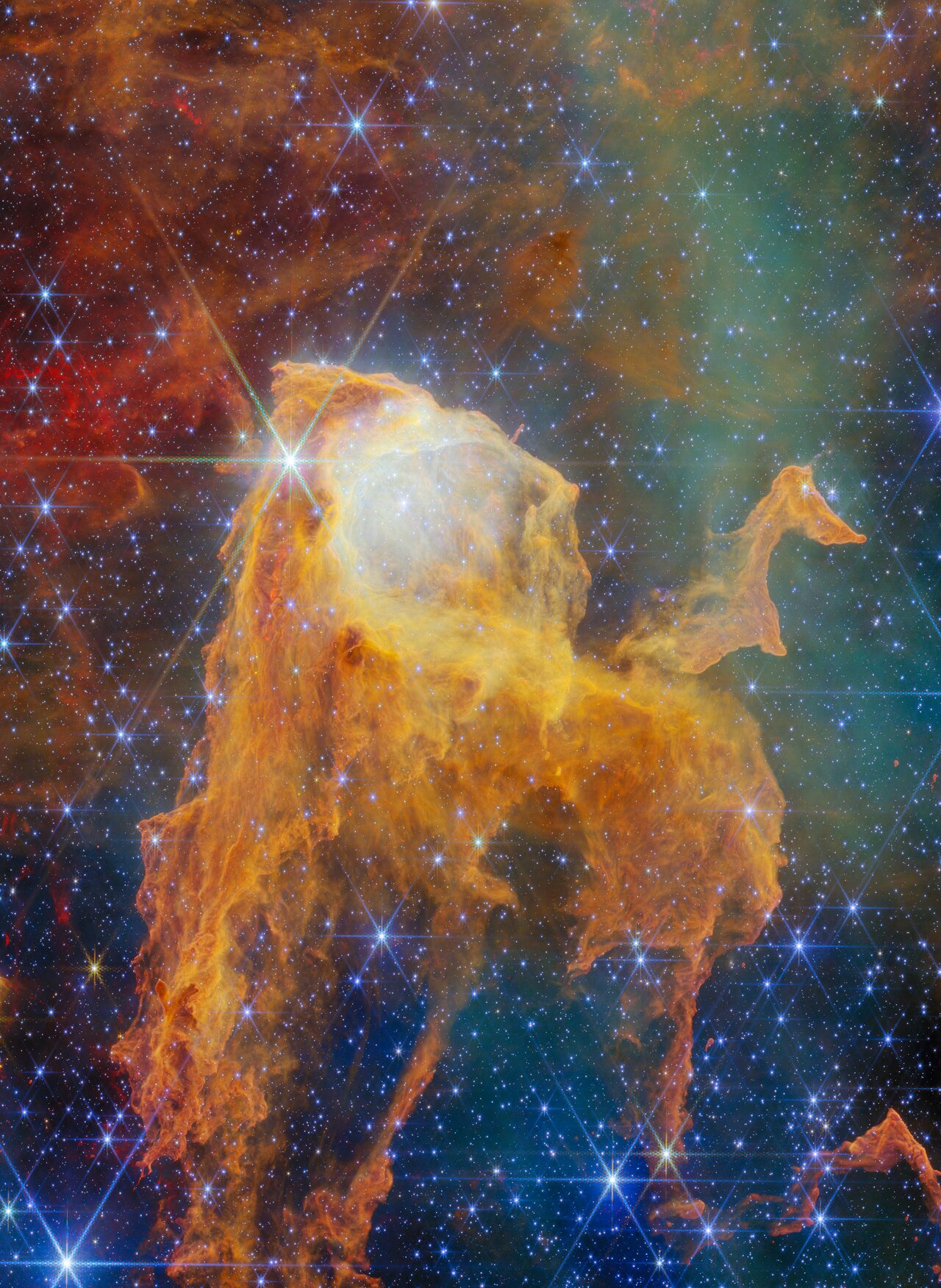
ESA/Webb, NASA & CSA, M. Reiter; Acknowledgement: M. H. Özsaraç The Treasure Chest
A compact cluster of young stars glows inside a cloud of gas and dust.
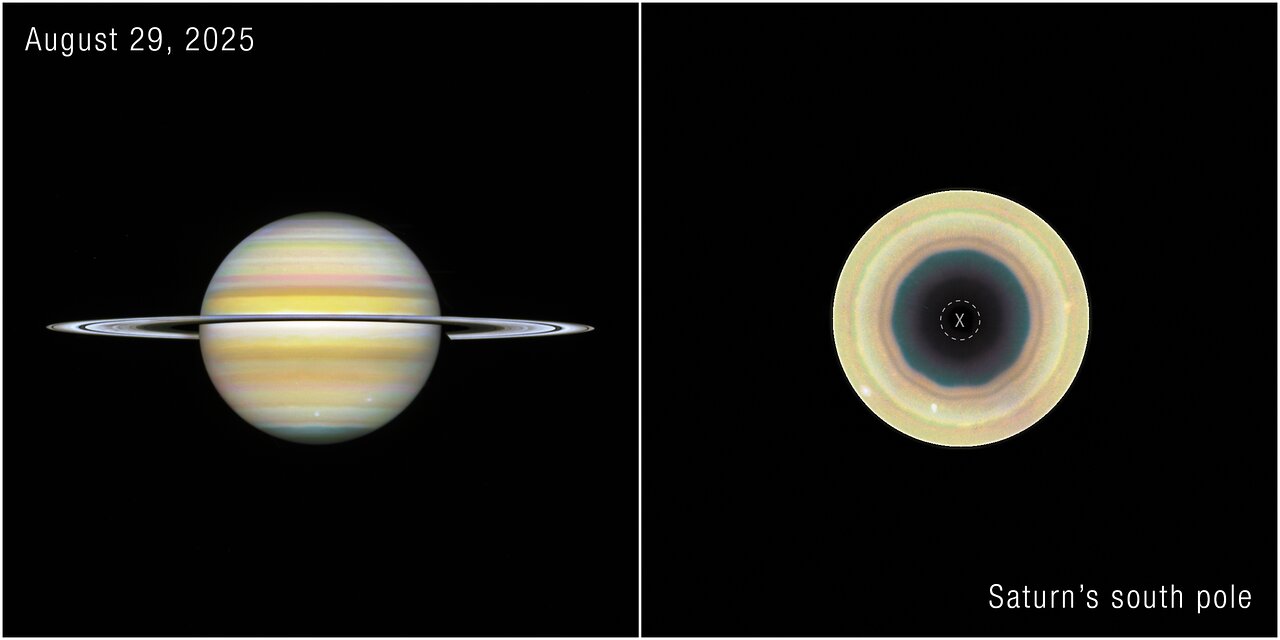
NASA, ESA, STScI, A. Sánchez-Lavega (University of the Basque Country), A. Simon (NASA-GSFC), M. Wong (UC Berkeley); Image Processing: A. Pagan (STScI) Saturn’s south pole
Hubble observations reveal a ten-sided pattern in the clouds around Saturn’s south pole.
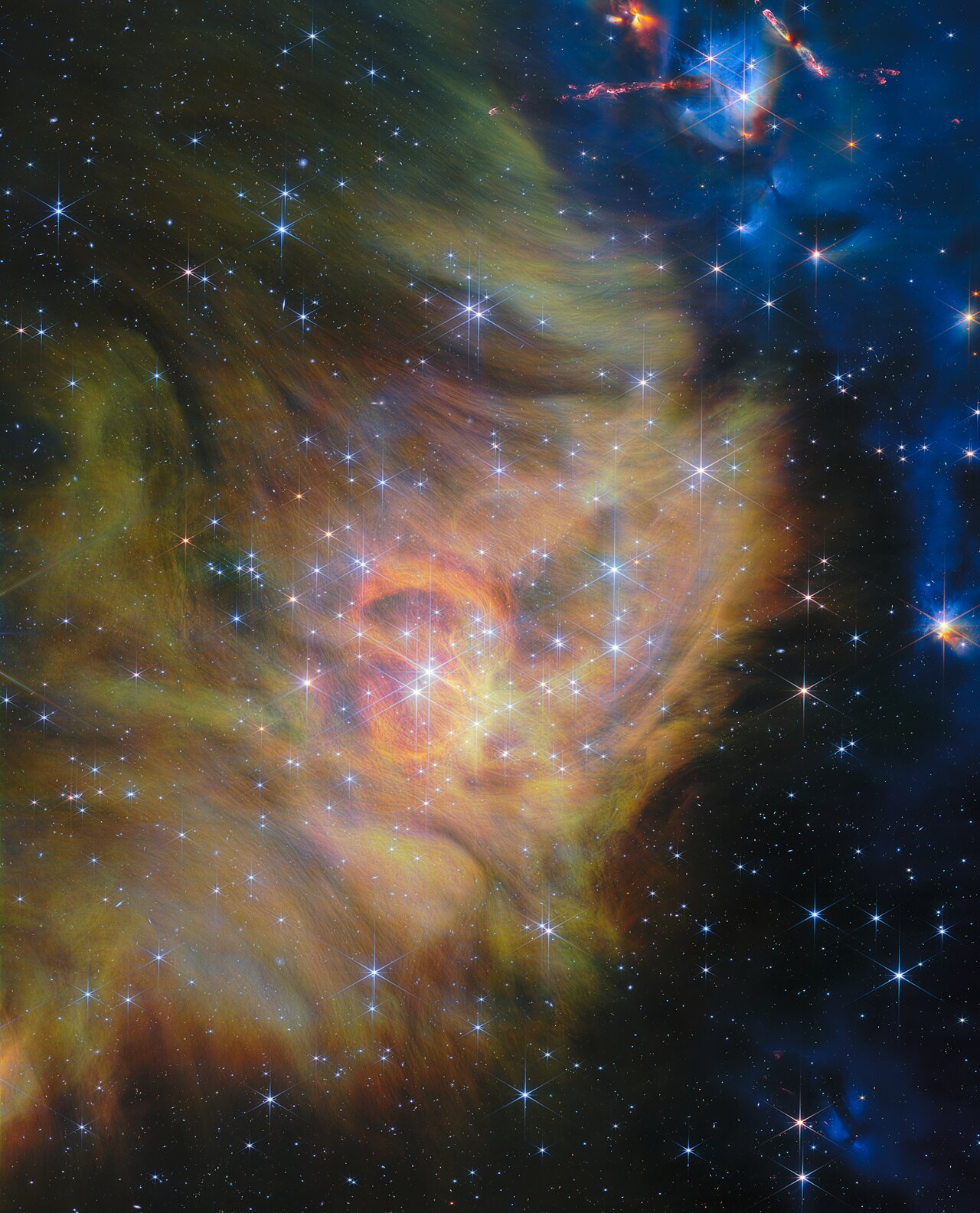
ESA/Webb, NASA, CSA, K. Luhman, C. Alves De Oliveira, M. Zamani (ESA/Webb) IC 348
Young stars, brown dwarfs and jets emerge from a wide infrared panorama.
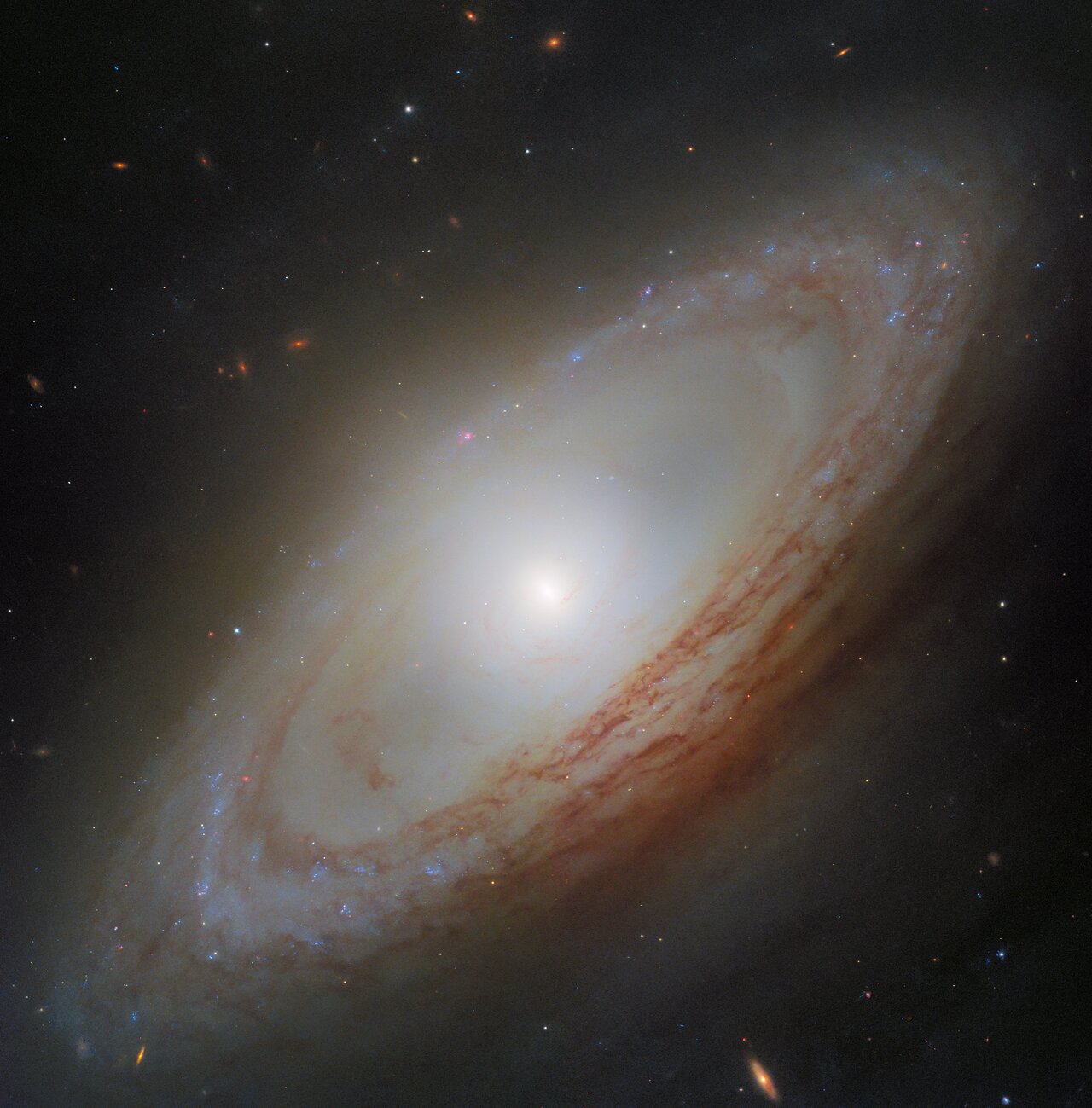
ESA/Hubble & NASA, D. Thilker, the MAUVE-HST Team NGC 4698
A galaxy whose central stars rotate across the plane of its spiral disc.
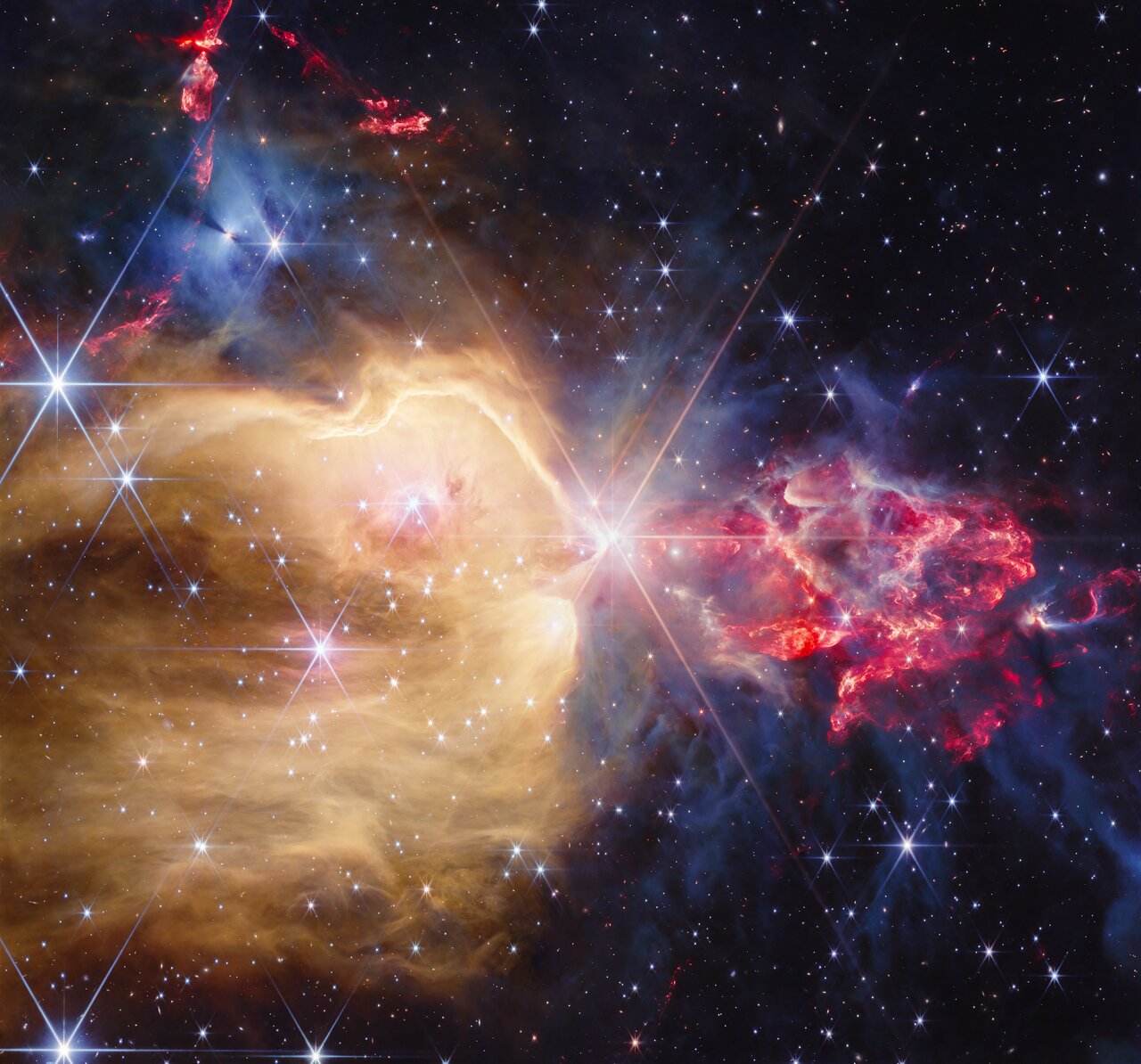
NASA, ESA, CSA, STScI; Image Processing: A. Pagan (STScI) NGC 7129
A stellar nursery where young stars, glowing cavities and protostellar outflows reshape the surrounding cloud.
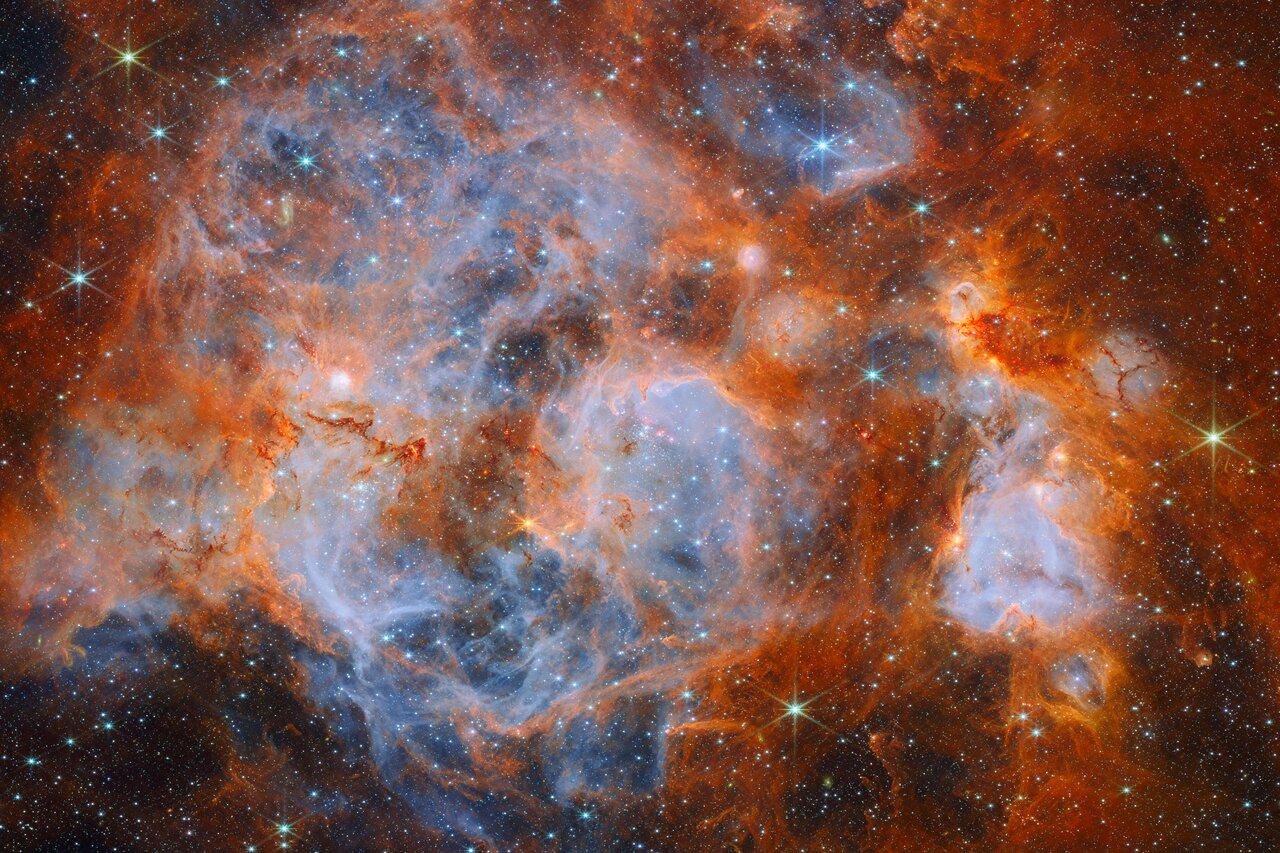
ESA/Webb, NASA & CSA, E. Sabbi, M. Zamani (ESA/Webb); Acknowledgement: M. H. Özsaraç N159
A turbulent stellar nursery where blue ionised gas, orange carbon-rich clouds and dark molecular filaments trace stars at different stages of formation.
Compare Hubble and WebbBack to the Hubble image
In the Cat’s Head, Hubble traces the dark dust silhouette. Webb reveals stars concealed within it.
Hubble · visibleWebb · near-infrared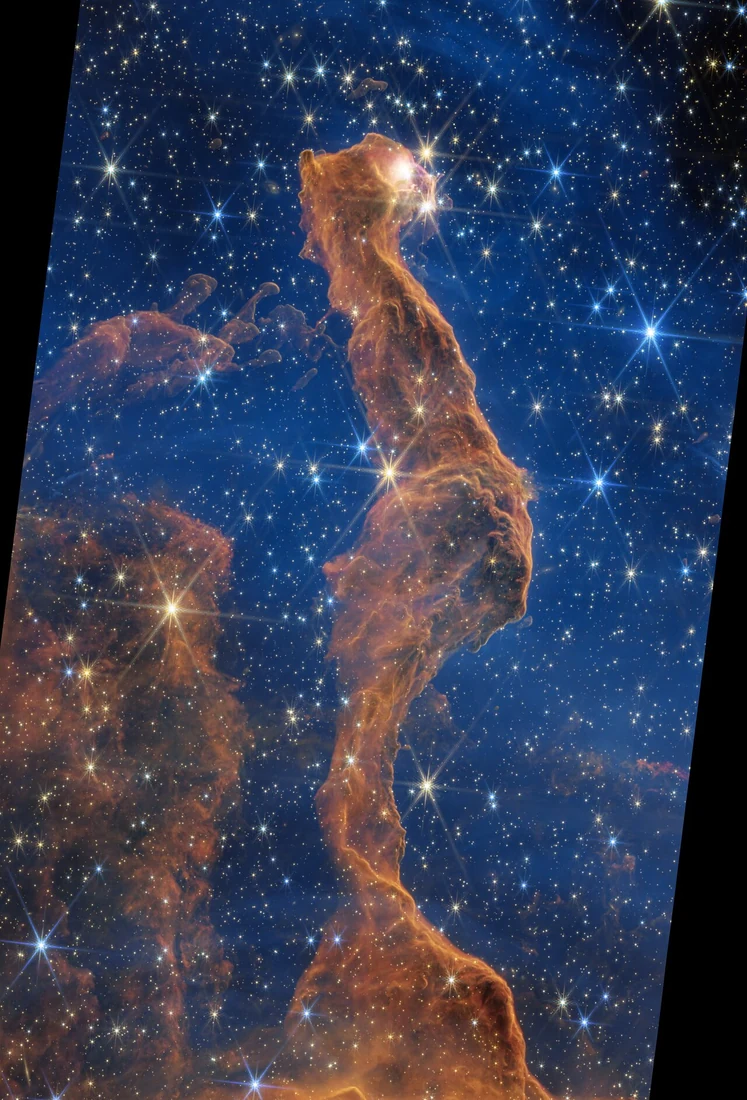
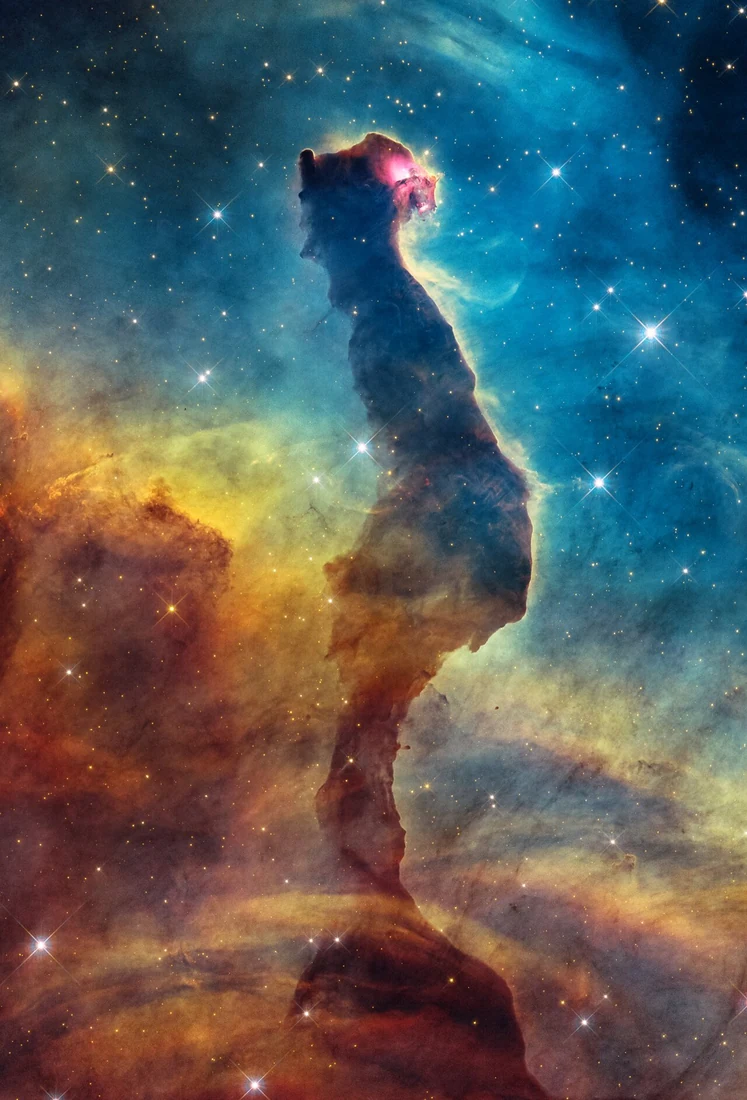
Hubble · NASA, ESA, STScI. Image processing: J. Depasquale (STScI)
Webb · NASA, ESA, CSA, STScI. Image processing: J. Depasquale (STScI)
Original ESA comparison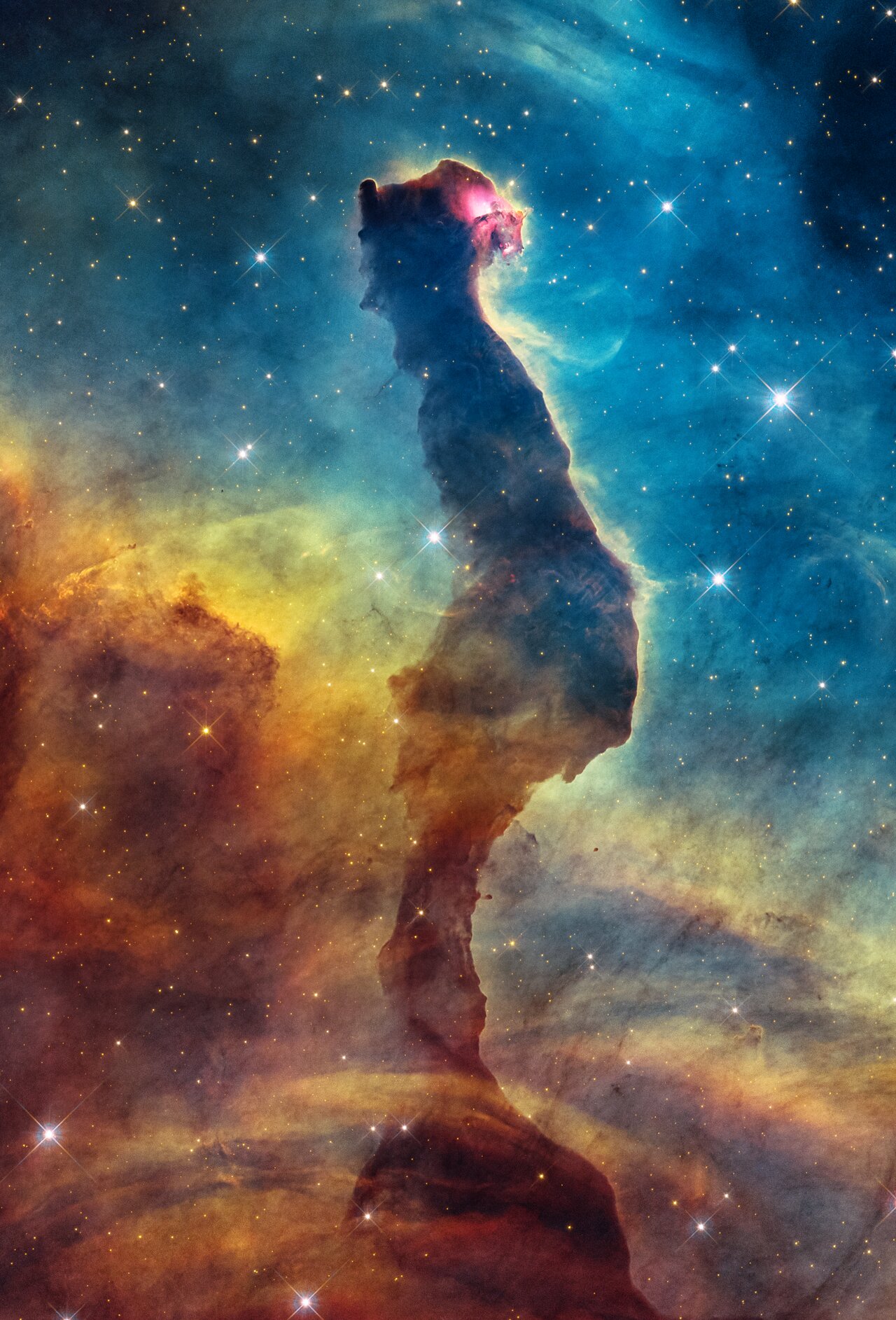
NASA, ESA, STScI. Image Processing: J. Depasquale (STScI). Cat’s Head Nebula
A dark pillar of dust takes on a feline silhouette, while a glowing red ‘eye’ hints at a young star still forming inside it.
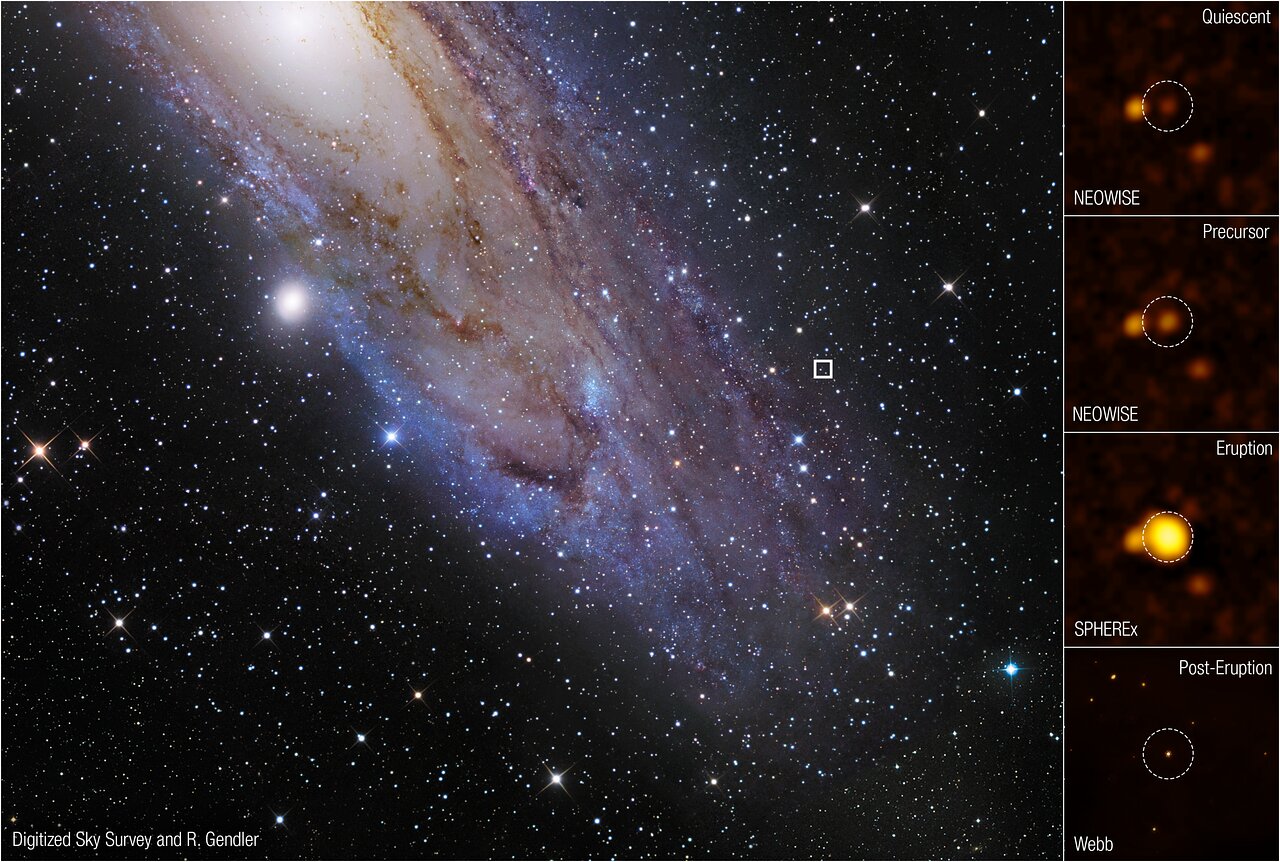
Image: NASA, ESA, CSA, STScI, V. Karambelkar (Columbia), K. De (Columbia). Image Processing: A. Pagan (STScI). Acknowledgment: R. Gendler, DSS Bao in Andromeda
At the edge of Andromeda, two stars merged into one. Webb observed the aftermath for three hours on 24 December 2025, tracing centuries of expelled dust in mid-infrared light. This archival collage was published on 18 November 2026; it is not a live view.
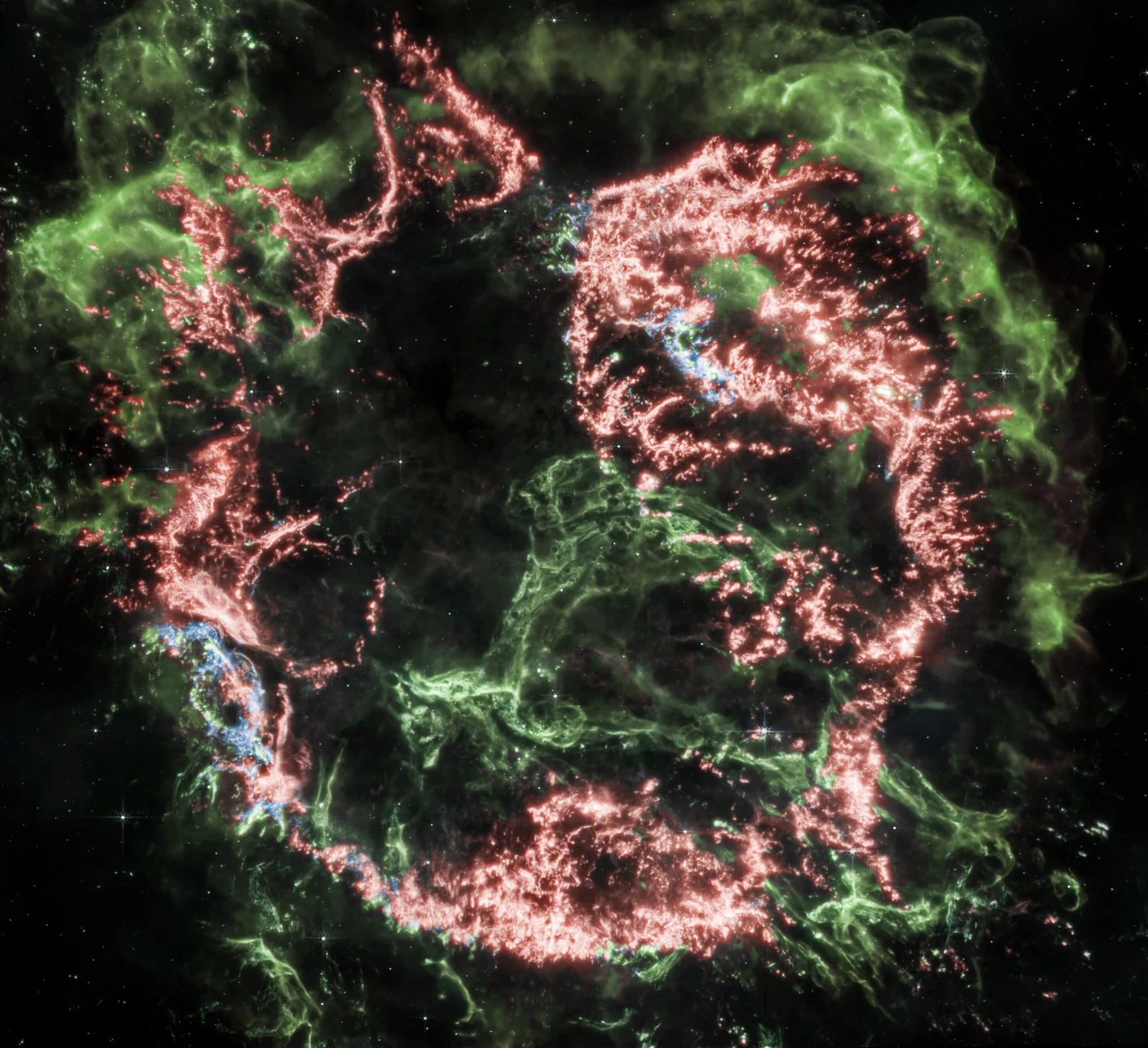
NASA, ESA, CSA, T. Temim (Columbia University), R. Arendt (UMBC), D. Milisavljevic (Purdue University). Image Processing: J. DePasquale (STScI). · CC BY 4.0 Cassiopeia A
The filaments of Cassiopeia A are debris from an exploded star. Using MIRI, Webb’s mid-infrared instrument, astronomers found dust rich in silica in one region and mostly carbon dust in another. The difference offers a clue that some of the star’s layers may have mixed shortly before it exploded.
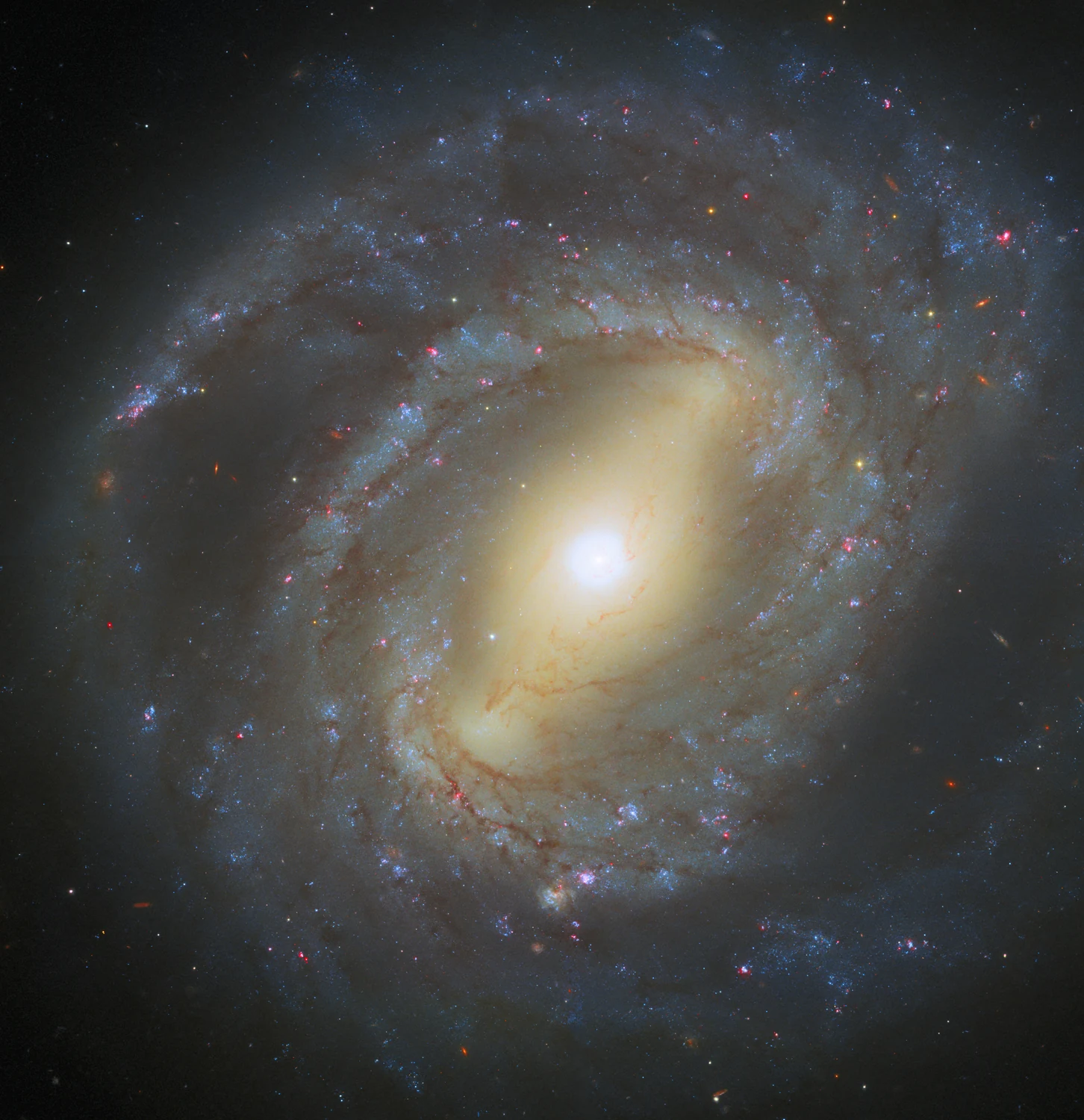
ESA/Hubble & NASA, E. Peng, D. Thilker and the MAUVE-HST Team · CC BY 4.0 NGC 4394
The golden streak across NGC 4394 is a bar of stars. Two spiral arms wind out from its ends. We see the galaxy nearly face-on, about 55 million light-years away in the Virgo Cluster. Astronomers use Hubble to date its star clusters and study how star formation comes to an end in galaxies like this one.
Explore published images
Finished images are published separately from observing schedules.
Hubble image archive ↗Webb image archive ↗